

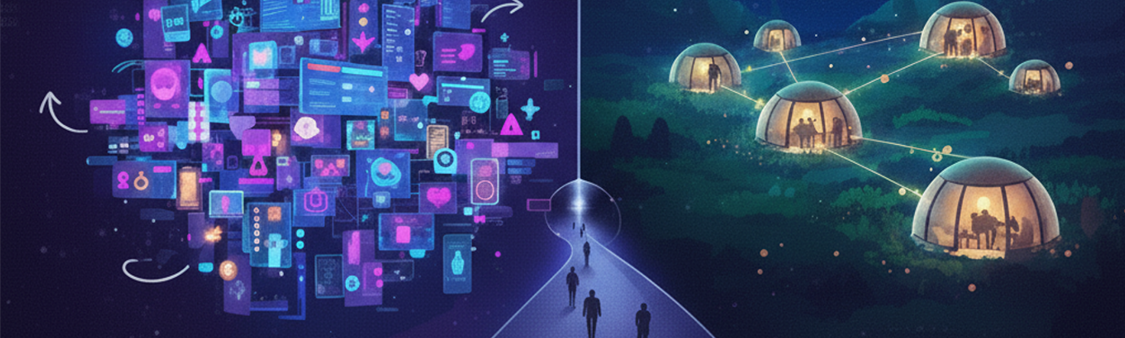
Remember when social media felt like a simple, friendly town square? You'd share a picture, your friends and family would like it, and you felt connected. Well, things have changed.
There has been a seismic shift in how people use social media. Your closest friends aren't posting anymore. They've vanished from the public feed, yet they're more connected than ever. So, where did everyone go?
Welcome to the Great Migration. Social media isn't truly social anymore. And that's not an accident; it’s the new reality.
The Public Feed Is Dead
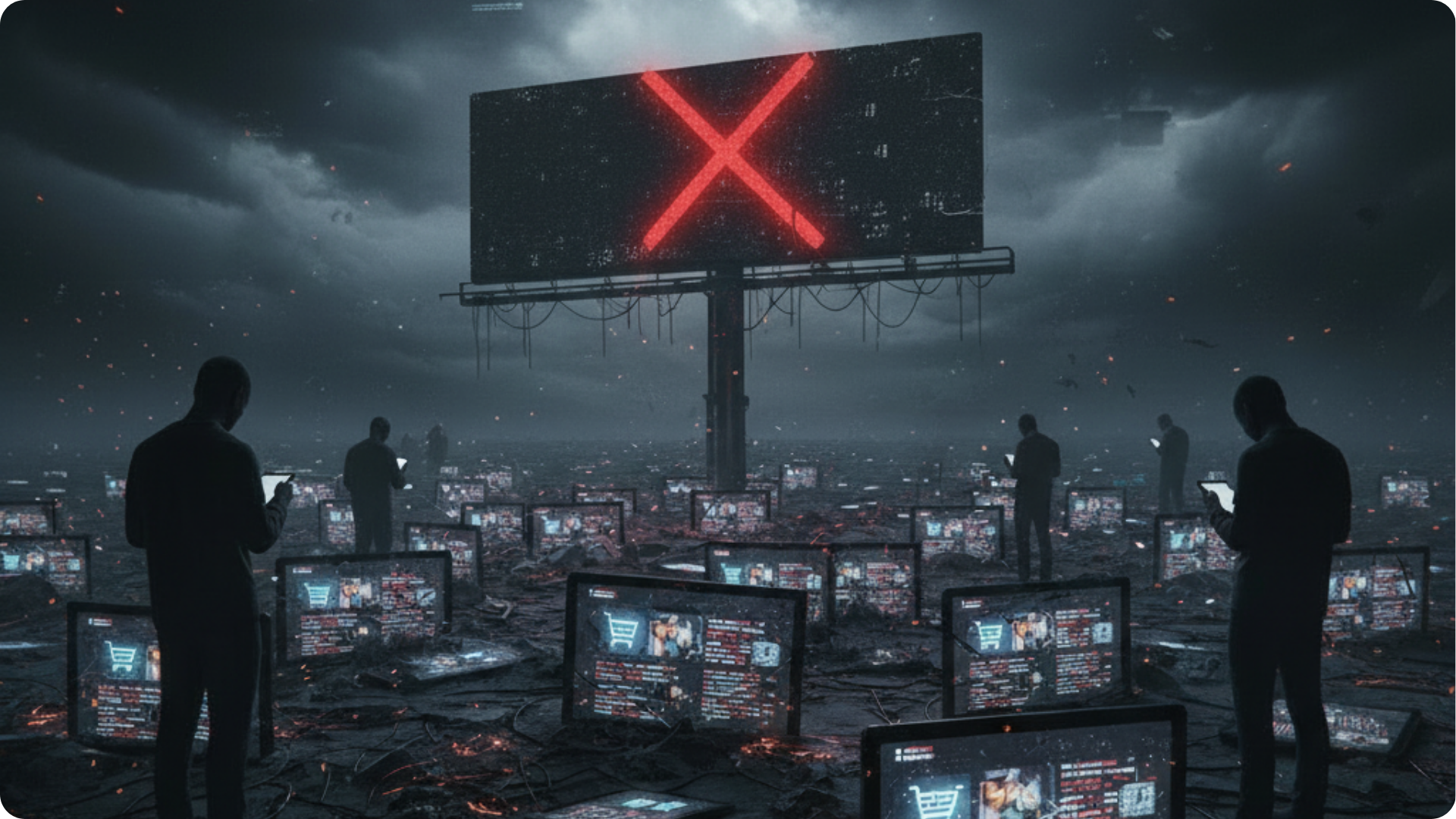
Let's be honest: the public social media feed is dead. Platforms like TikTok, Instagram, and YouTube Shorts are no longer a digital scrapbook of our lives; they’ve become entertainment engines with an endless stream of performances. They’ve also transformed into shopping malls and even search engines, because Gen Z decided TikTok is better than Google for finding the trending winter sweater, vacation destinations, hotels and restaurant recommendations.
With social commerce expected to hit 17% of all online sales by 2025, the line between content and shopping has completely blurred.
You're not scrolling to see what friends are doing. You're scrolling through an algorithmic gauntlet of influencers, ads, and products. And frankly, we're all exhausted by it.
The public feed has become a stage for performance, not for vulnerability. Every post is curated, filtered, and optimized for engagement. The noise, toxicity, misinformation, and constant comparison are driving authentic connection away from the public feeds.
So, if real connections have fled, where exactly did they go?
The Underground Network
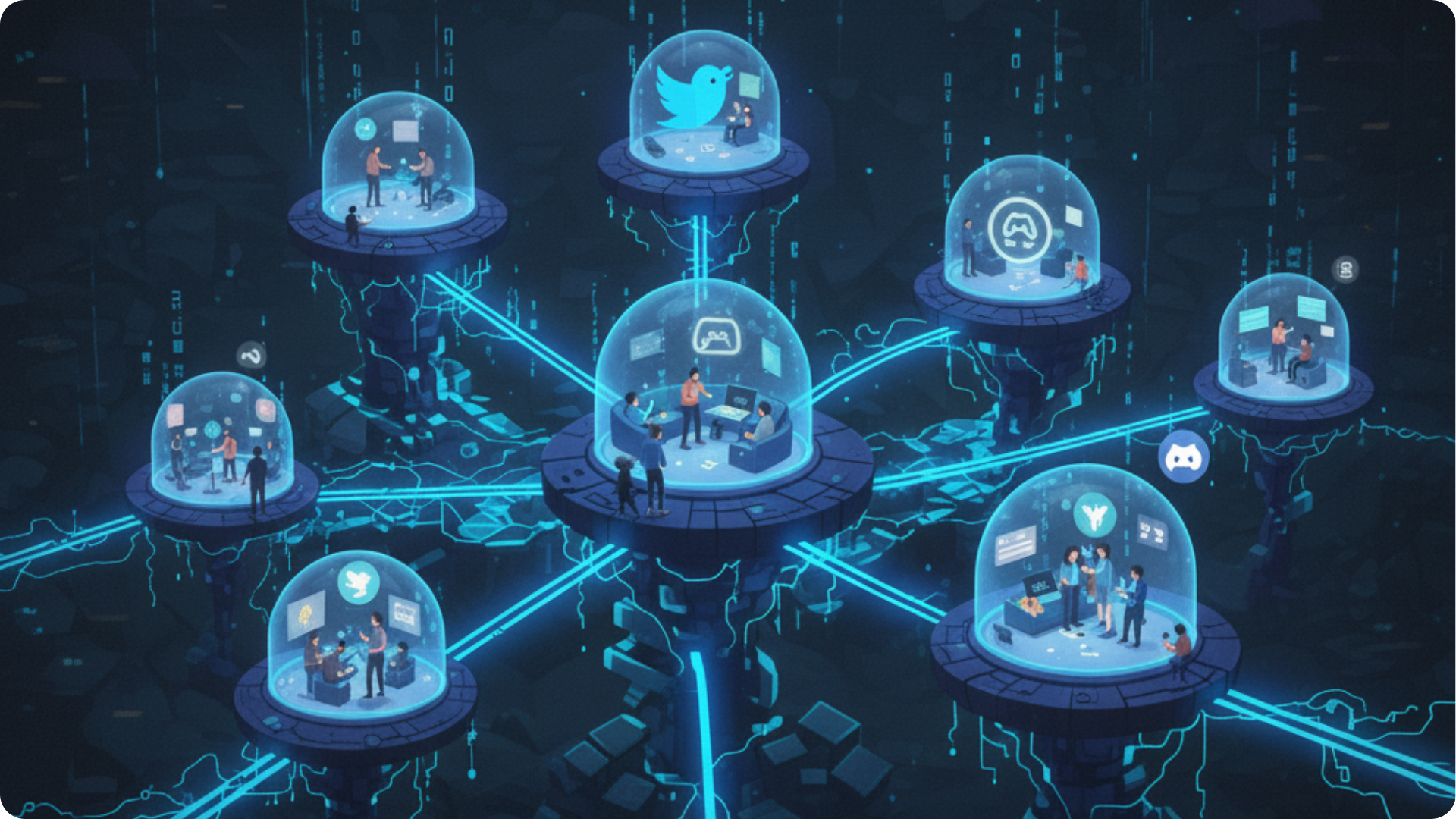
Your best friends aren't hiding; they're just migrating to places you can't see.
The most important conversations and real connections are now happening in private, encrypted, small-group digital spaces. They’re thriving in places like WhatsApp groups, Instagram Close Friends and DMs, Discord servers, Telegram channels, Reddit Threads, Signal conversations, and even Snapchat’s disappearing messages. These are the new digital living rooms—spaces where people feel safe enough to be real. The shift is dramatic. Nearly 60% of people under 30 prefer these smaller social communities over mega-platforms. They're not abandoning social connection. They're just abandoning the public stage.
What happens in these private spaces is fundamentally different:
- No algorithms deciding what you see.
- No engagement metrics to chase.
- No strangers judging your every post.
Just authentic, intentional, and encrypted communication between people who know and trust each other.
The irony? The most "social" communication is happening in the most private spaces.
Authenticity Over Scale: The New Platforms

We are seeing new platforms emerge that aren’t trying to be everything to everyone. They are aiming to be something meaningful to someone.
Platforms like BlueSky, built by former Twitter CEO Jack Dorsey, are decentralized, giving users ownership of their data. It has grown to over 25 million users with organic traffic surging 7x in the past year. Mastodon is a non-profit, federated network where communities set their own rules. Discord, originally designed for gamers, has evolved into a platform for organizing communities around any interest.
The pattern is clear: users are tired of curated perfection. They crave authenticity, control, and community. The future isn't one giant platform: it’s a fragmented network of niche apps tailored to specific needs.
Digital Fatigue & The Pivot to Real Life
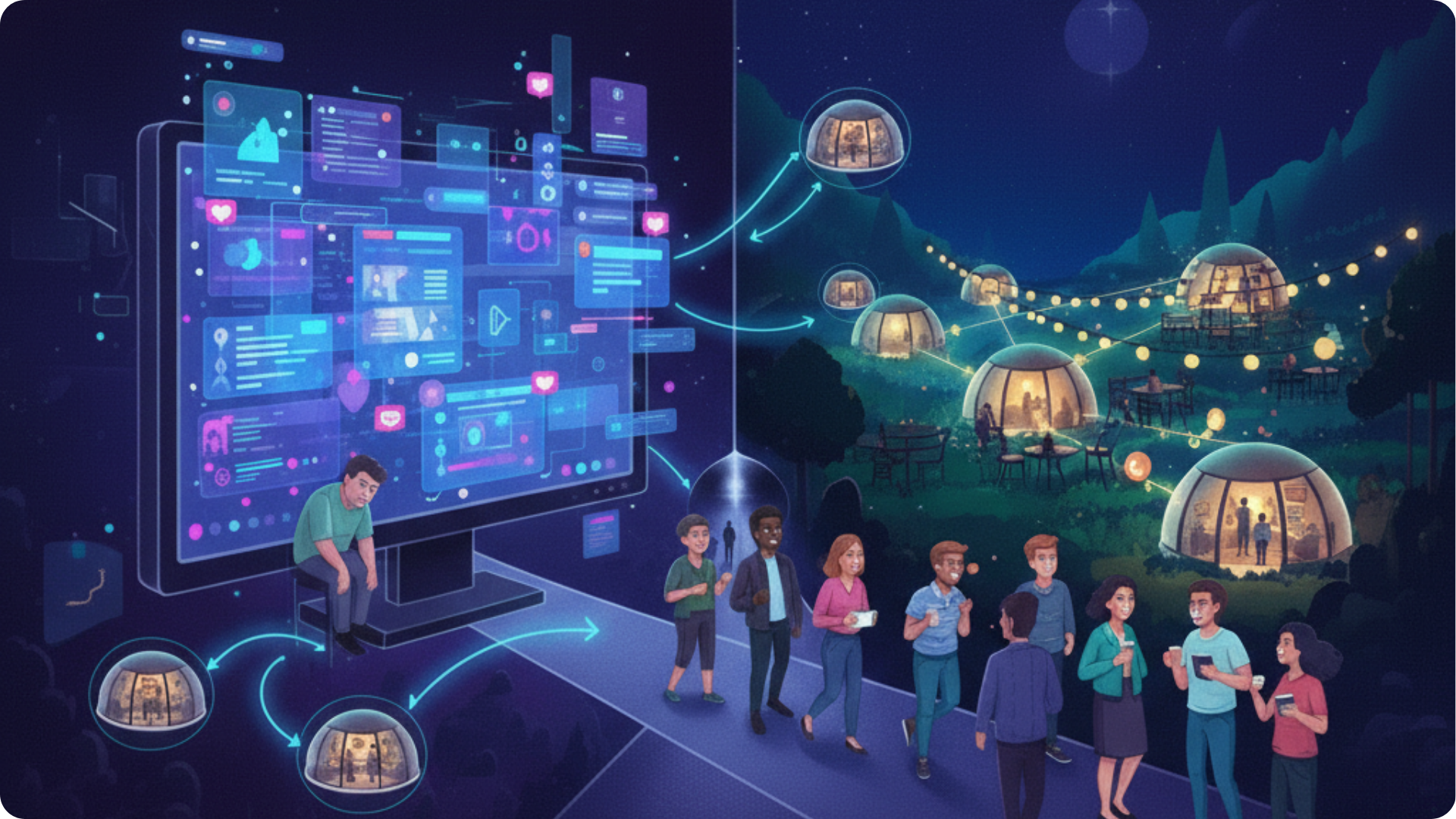
The craving for private, safer, slower connections is directly fueling the desire to log off more often and an explosion of IRL events.
When you're in a private Close Friends or a trusted Discord server, you’re not just chatting. You’re more likely to actually show up and meet up. The loop looks like this:
Private Digital Space → High Trust & Intent → IRL Event/Action → Shared Memory → Back to Private Space → Strengthen the Community
The creator economy is also pivoting hard to IRL experiences because the highest value interaction happens in person. Even 41% of U.S. social media users attended at least one in-person influencer event in the past year.
Below are 2 examples of the Great Migration:
- Dior's $0 Genius Move: For Paris Fashion Week in 2025, Dior didn't send mass emails or post public announcements. Instead, they added every VIP celebrity, fashion editor, and key influencer to a secret Close Friends list. Then they drip-fed personalized invites, outfit notes, and behind-the-scenes teasers. Each person felt chosen. The cost was zero dollars, but the impact was massive. Dior understood that exclusivity is the new currency. The real status symbol wasn't the public post. It was being on the private list.
The lesson for every brand: the future isn't bigger audiences. It's smaller, more exclusive ones. It’s building community instead of pushing messages.
- How Nepal Toppled a Government on Discord: In September 2025, Nepal's government banned social media platforms—Facebook, X, YouTube, LinkedIn, Signal. The idea was simple: shut down the platforms, shut down the revolution. It didn't work. Instead, youth migrated to Discord—a platform designed for gamers. It quickly became the central hub for a political movement that mobilized more than 160,000 people, who ousted the Prime Minister and used the gaming app’s poll feature to elect a new one.
This was a powerful demonstration of where real power now resides. Influence moved away from the public stage and into private, trusted spaces.
The Future Is F.U.N.
So, what does the future of social media look like?
- It's Fragmented—not one giant platform, but niche apps and communities.
- It's Underground—private messaging, encrypted spaces, small groups where authentic connection happens.-
- It’s Now (IRL)—real-world events and tangible action fueled by high-trust digital connections.
The future is F.U.N. And it's already here.
The question for brands is: Are you ready to shift from reach to relevance? From audiences to communities? From viral moments to meaningful experiences? And ultimately, from engagement to trust?
The platforms are changing, the audiences are changing, and the rules are changing.
The future of social media isn't about being social with everyone. It's about being real with who you care about.
And that changes everything.
